
How Ignoring a Small Cavity Can Lead to Major Tooth Damage
Why a Small Cavity Is a Big Deal
A tiny cavity can seem easy to put off, especially when your tooth still feels comfortable and looks healthy. What many people do not realize is that early decay can continue to progress through the tooth over time, affecting more of its structure and necessitating more extensive care. In this blog, we explain why paying attention to small problem areas matters and how prompt treatment can help protect your long-term oral health. Dentistry By Design helps patients in Grand Rapids, MI recognize tooth decay symptoms early so they can preserve strong, healthy smiles with timely care. Knowing what to watch for and when to seek treatment can make a meaningful difference in preventing more serious dental issues and maintaining confidence in your smile.
Early Cavity Signs You Should Never Ignore
Small changes in your teeth can reveal important clues about developing decay. Paying attention to these warning signs can help you seek care before an untreated cavity damages a larger portion of the tooth. Early detection often allows for simpler treatment and supports lasting oral health. Here are the early cavity signs you should never ignore:
- Tooth Sensitivity to Hot, Cold, or Sweet Foods – A tooth may react more strongly than usual when exposed to certain temperatures or sugary items. This sensitivity can occur when decay begins to affect the tooth’s protective outer layer.
- White, Brown, or Dark Spots on a Tooth – Changes in tooth color often signal that minerals are being lost from the enamel. Addressing these spots early can help protect the tooth from further damage.
- Mild Discomfort When Biting or Chewing – A cavity can create weak areas in the tooth that respond to pressure. Even occasional discomfort deserves attention from a dental professional.
- Rough or Small Pitted Areas on the Tooth Surface – Decay can gradually wear away enamel and leave noticeable texture changes. These areas may trap food and plaque, allowing the cavity to expand.
- Food Frequently Getting Stuck in the Same Spot – A developing cavity can alter the shape of a tooth and create spaces where debris collects. Consistent buildup in one area may indicate a problem that needs evaluation.
- Persistent Tooth Sensitivity in One Location – Ongoing sensitivity that affects the same tooth should not be overlooked. A dental exam can determine whether early decay is contributing to the discomfort.
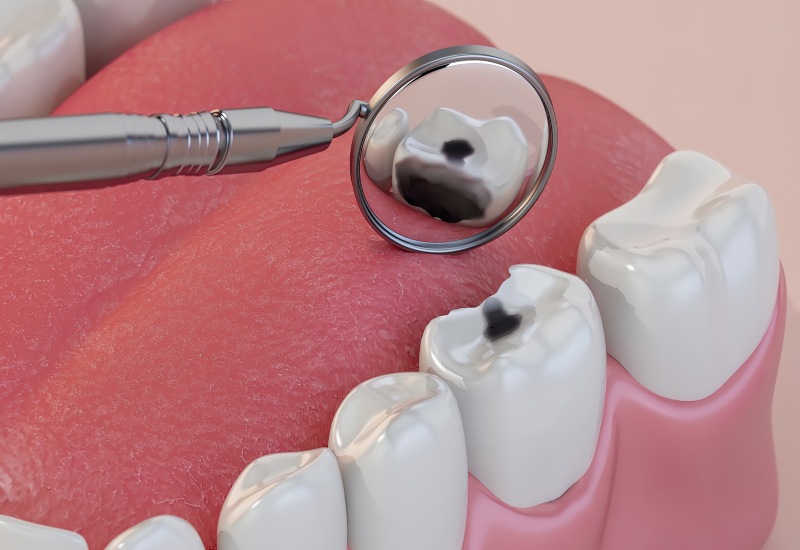
How a Cavity Progresses Over Time
A cavity often starts with the gradual breakdown of tooth enamel, the hard outer layer that protects your teeth. As decay moves deeper, it can reach the softened dentin beneath the enamel, making the tooth more sensitive and vulnerable to damage. Continued progression may affect the inner pulp, where nerves and blood vessels are located, leading to increased discomfort and reduced tooth strength. Prompt cavity treatment helps preserve healthy tooth structure and limits the risk of extensive tooth damage from cavities, allowing you to maintain a comfortable, confident smile.
Signs a Cavity Is Getting Worse
A small cavity can change over time and begin affecting more of the tooth’s structure. Recognizing the warning signs early helps protect your smile and reduces the likelihood of significant tooth damage from cavities. If symptoms become more noticeable or frequent, scheduling a dental visit can help preserve the health and function of the affected tooth. The list below highlights the signs that a cavity is getting worse:
- Increased Tooth Sensitivity – Sensitivity may become stronger and last longer after eating or drinking hot, cold, or sweet items. This change often suggests that decay has moved beyond the outer enamel layer.
- Persistent Toothache – A cavity that continues to grow can irritate deeper parts of the tooth. Pain that occurs regularly deserves a professional evaluation.
- Visible Holes or Larger Dark Areas – Decay can create openings that become easier to see over time. These changes often indicate that the cavity has expanded and affected more tooth structure.
- Pain While Chewing – Pressure from biting can trigger discomfort when a weakened tooth is no longer able to withstand normal forces. This symptom may point to advancing decay within the tooth.
- Food Trapping More Often Around a Tooth – Enlarging cavities can create spaces where food particles collect. Frequent buildup in the same area may signal that the damaged section has grown.
- Swelling or Irritation Near the Tooth – The gums surrounding an affected tooth may become tender or appear puffy. This change may indicate that the cavity is affecting nearby tissues and should be examined promptly.
The Risks of Untreated Tooth Decay
Tooth decay does not remain in one place. As it advances, it can affect deeper layers of the tooth and increase the need for more extensive dental care. The risks of untreated tooth decay include worsening tooth sensitivity, persistent discomfort, weakened tooth structure, and an increased risk of fractures. Decay that reaches the inner portion of a tooth may require restorative treatment to preserve its function and appearance. Early attention to cavity concerns helps protect healthy tooth structure, supports long-term oral health, and reduces the likelihood of significant dental complications.
Tooth Damage from Cavities
Early cavity treatment often involves a simple filling that restores strength and protects the affected tooth. As decay progresses, more extensive tooth damage from cavities can develop and affect a larger portion of the tooth’s structure. A filling may no longer provide adequate support when significant enamel and dentin have been lost. In these situations, treatments such as dental crowns, root canal therapy, or other restorative procedures may offer better protection and function. Prompt dental care helps preserve as much healthy tooth structure as possible.
Cavity Treatment: Why Early Intervention Matters
Getting early treatment helps preserve healthy tooth structure and keeps small concerns from affecting a larger area of the tooth. When decay is identified in its early stages, treatment is often simpler and can be completed with conservation restorative care. Prompt attention also helps maintain normal chewing function and supports long-term oral health. Regular dental exams allow your dentist to spot developing decay before symptoms become more noticeable. Taking action early can reduce the extent of future treatment and protect the strength of your teeth. And help you enjoy a healthy, confident smile.
Avoid Tooth Damage from Cavities
Small dental concerns are often easier to address when identified early. Paying attention to the symptoms of tooth decay can help protect your teeth from extensive damage and support a healthier smile for years to come. Dentistry By Design provides comprehensive dental care for patients in Grand Rapids, MI who want to maintain strong, comfortable teeth and gums. Our friendly team uses advanced technology and proven treatment techniques to address cavities at every stage. Contact us today to schedule an appointment and take the next step toward lasting oral health and a confident smile.
Cavity FAQs
Can a Cavity Spread to Other Parts of the Tooth?
Yes. Tooth decay often begins in one area and can spread as bacteria continue to affect the tooth structure. The longer the decay remains untreated, the more damage it can cause.
Will a Cavity Go Away On Its Own?
Cavities do not typically heal without professional dental care. Once a cavity forms, treatment is usually needed to restore the affected area and protect the tooth.
Is Tooth Sensitivity Always a Sign of a Cavity?
Tooth sensitivity can have several causes, but cavities are a common cause. A dental examination can determine whether decay is responsible for your symptoms.
How Quickly Can a Cavity Get Worse?
The rate varies from person to person based on factors such as oral hygiene, diet, and overall dental health. Regular dental visits help identify changes before significant damage occurs.
When Should I See a Dentist About a Possible Cavity?
You should schedule an appointment if you notice sensitivity, discoloration, discomfort, or other changes in your teeth. Early evaluation can help prevent minor decay from becoming a more significant dental concern.

Why Saving a Tooth Isn’t Always Possible
Healthy smiles often start with preserving natural teeth whenever possible, but some dental conditions…